
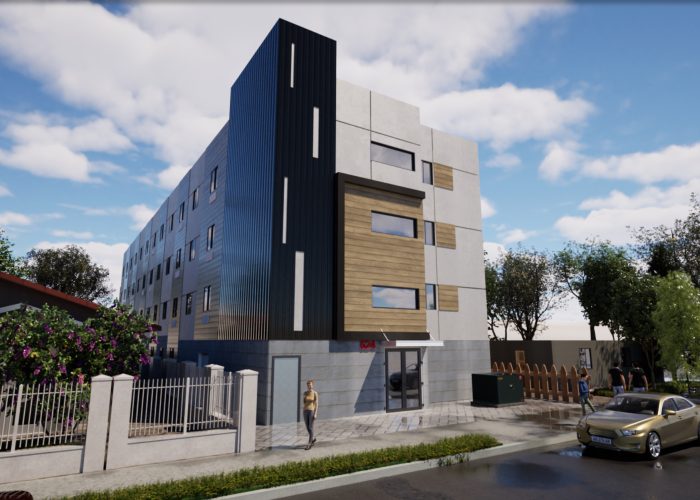

A 47-Unit Transit-Oriented Affordable Housing Development in South Los Angeles Executive Summary
This project is a fully approved, 4-story affordable multifamily development strategically located at 624 W Imperial Hwy, Los Angeles, CA 90044. Designed to address the critical demand for high-quality workforce housing, the development leverages vested plans and state/city density incentives (including ED1) to maximize unit density on an 8,850 SF infill lot.
Fully Private Funding for Faster Delivery
By utilizing a 100% privately funded model, the project eliminates reliance on public subsidies, ensuring a streamlined timeline and faster market entry.
Projected Valuation:
$17,966,267
Total Capital Request:
$1,600,000
Target Completion:
Spring 2028
The development is optimized for workforce and single-person households, prioritizing high-yield units over resident parking to enhance Net Operating Income (NOI).
Financial Performance (Year 1 Estimates)
The project demonstrates a lean operating model with robust cash flow projections.
Effective Gross Income (EGI):
$1,217,338
Operating Expenses:
$244,823
Net Operating Income (NOI):
$898,313
Net Cash Flow (After Debt):
$365,190
Cost to Build:
$6,000,000
Market Edge: Units are positioned at $1,800–$2,200/month, providing a modern, new-construction alternative that is significantly more affordable than the $2,800+ luxury market average
Location & Market Dynamics
Prime South LA Connectivity:
Transit-Oriented:
Good to Excellent" transit access (Score: ~62-70) with proximity to Metro connections and the I-110/I-105 freeways.
High Demand:
The 90044 submarket is approximately 70% renter-occupied, facing a deep housing supply deficit.
Stable Fundamentals:
Citywide multifamily vacancy remains near 5%, which is below national averages.
Development Timeline & Exit Strategy
Construction Duration:
16–18 months.
Stabilization:
6 months to 1 year.
Primary Exit:
A refinance upon stabilization to repay the private loan within the 18-month term.
Secondary Exit:
Sale to a long-term affordable housing owner or strategic recapitalization.
Community & ESG Impact
Affordability:
Directly addresses local housing shortages with 47 income-qualified units.
Environmental:
Car-free design reduces carbon emissions and vehicle dependency.
Social Stability:
Provides long-term security for the local workforce, supporting economic mobility.